

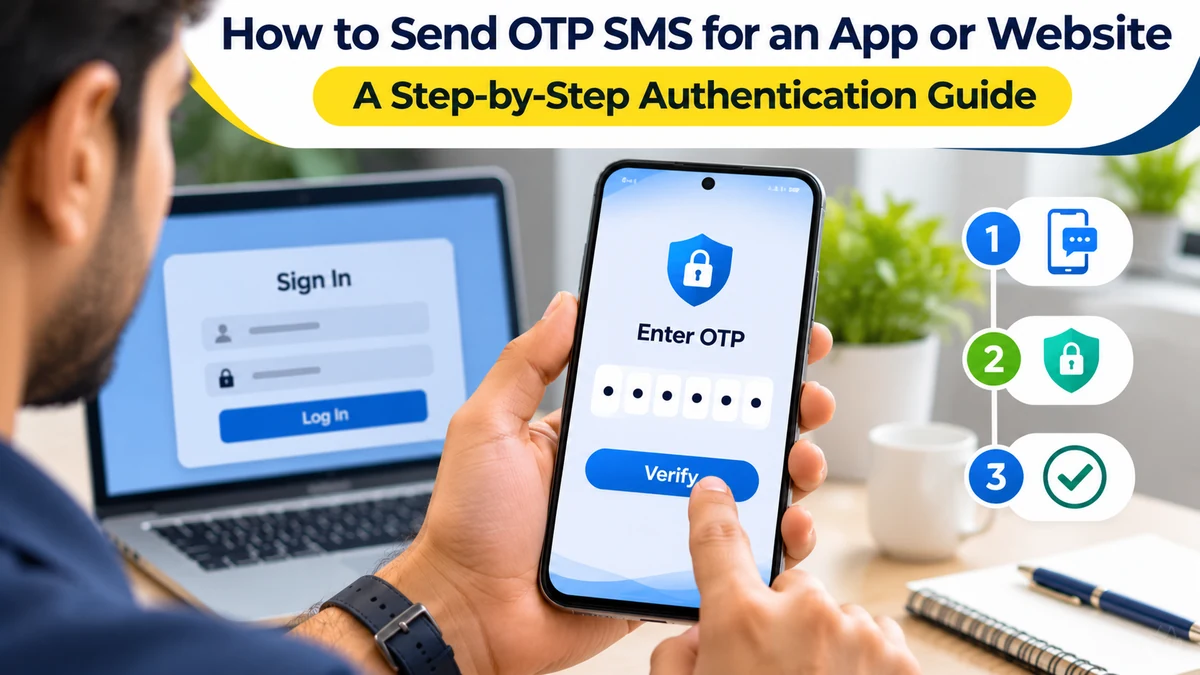
An OTP flow confirms that a user controls a communication channel at a particular moment; it does not prove a person’s full identity. The implementation must protect the code, limit abuse and provide a secure alternative when delivery fails.
Key Takeaways
- An OTP flow confirms that a user controls a communication channel at a particular moment; it does not prove a person’s full identity. The impleme
- Generate codes server-side with a cryptographically secure random generator, bind each code to a user and purpose, store only a protected represe
- Use rate limits per account, device and destination; cap retries; prevent code reuse; mask numbers in logs; protect API credentials; validate web
A practical implementation guide to generating, sending, validating and monitoring one-time passwords for app and website authentication. The most useful decision is the one that fits the actual purpose, the evidence available and the experience expected by the person receiving the communication.
What this guide covers
An OTP flow confirms that a user controls a communication channel at a particular moment; it does not prove a person’s full identity. The implementation must protect the code, limit abuse and provide a secure alternative when delivery fails. A clear scope prevents teams from confusing a record count, an API feature or a marketing label with proof that a campaign is suitable. Write down the intended outcome and the limits of the information before selecting a tool or provider.
Keep the business objective specific. Identify the owner of the process, the people affected, the information required and the action that should happen next. This makes it easier to explain the workflow to colleagues and to detect when a proposed use goes beyond the original purpose.
How to plan the right approach
Generate codes server-side with a cryptographically secure random generator, bind each code to a user and purpose, store only a protected representation where practical, set a short expiry and invalidate it after successful use. Send through an approved provider API and verify delivery callbacks.
A sign-in flow should create an OTP only after the user requests it, show a neutral confirmation, accept the code once and invalidate it after expiry or successful verification. Document the decisions that matter: who approved the activity, which source or system is involved, what information is used and how a person can ask a question or change their preference.
What to verify before choosing or launching
Use rate limits per account, device and destination; cap retries; prevent code reuse; mask numbers in logs; protect API credentials; validate webhooks; and add monitoring for unusual request patterns.
- Confirm ownership and the person responsible for approving the work.
- Check the source, permissions, technical requirements and current terms that apply.
- Test the complete journey, including failure, correction and escalation paths.
- Keep a record of decisions, changes, incidents and customer preferences.
DLT, consent and message governance
Never log full OTPs, expose codes in analytics, accept expired codes or let a client-side timer decide validity. Follow current telecom and sender registration requirements for the route.
For applicable bulk SMS communication in India, consult TRAI’s advice to senders and the relevant access provider’s current code of practice. Requirements can include Principal Entity registration, header and content-template registration, and consent processes where applicable.
Classify the communication by its actual purpose. Do not place promotional copy inside an authentication or service message to avoid review. Keep approved template content, variable fields, sender details and suppression records aligned with the live campaign configuration.
Measure outcomes and improve
Measure delivery latency, successful verification, resend frequency, failed attempts, provider errors and suspected abuse. Segment network delivery failures from user-entry errors.
Set a baseline before launch and review results over a defined period. Compare like with like, segment the data where appropriate and investigate unexpected changes before drawing conclusions. A metric should help the team make a better decision, not simply make a report look impressive.
Common mistakes to avoid
Never log full OTPs, expose codes in analytics, accept expired codes or let a client-side timer decide validity. Follow current telecom and sender registration requirements for the route. Another frequent mistake is measuring activity without checking whether it produced a useful result. Review the customer experience, operational workload and any negative feedback alongside the headline metric.
Keep the process documented and revisit it when the product, provider, rules or audience changes. If an important fact cannot be verified, label it as unconfirmed and resolve it before publication or campaign launch.
Frequently Asked Questions
What should I check first?
Start with the purpose, source, permissions, scope and evidence. Then test the complete workflow before scaling.
Does a large record or message count guarantee results?
No. Volume does not guarantee relevance, delivery, response or conversion. Measure the outcome that matters to the business.
Can I use the same process for every audience?
Usually not. Requirements vary by audience, channel, geography and purpose. Segment carefully and review the applicable rules.
How often should this process be reviewed?
Review it whenever the provider, platform, law, data source or campaign purpose changes, and on a regular schedule set by the business.
Official references
For India-focused personal-data workflows, review the Digital Personal Data Protection Act, 2023 and the Digital Personal Data Protection Rules, 2025. Check commencement notifications and current applicability rather than assuming every provision has the same effective date.
For applicable bulk SMS communication in India, consult TRAI’s advice to senders and the relevant access provider’s current code of practice. Requirements can include Principal Entity registration, header and content-template registration, and consent processes where applicable.
Explore related Astral Promotion services
Explore the related service Explore the related service
Conclusion
A practical implementation guide to generating, sending, validating and monitoring one-time passwords for app and website authentication. Use a documented, evidence-led approach, protect the people affected by the workflow and review the results before expanding it. For a service discussion, visit the relevant Astral Promotion service page or contact the team with your requirements.


Comments and discussion
Be the first to join the discussion. Comments are reviewed before appearing publicly.