

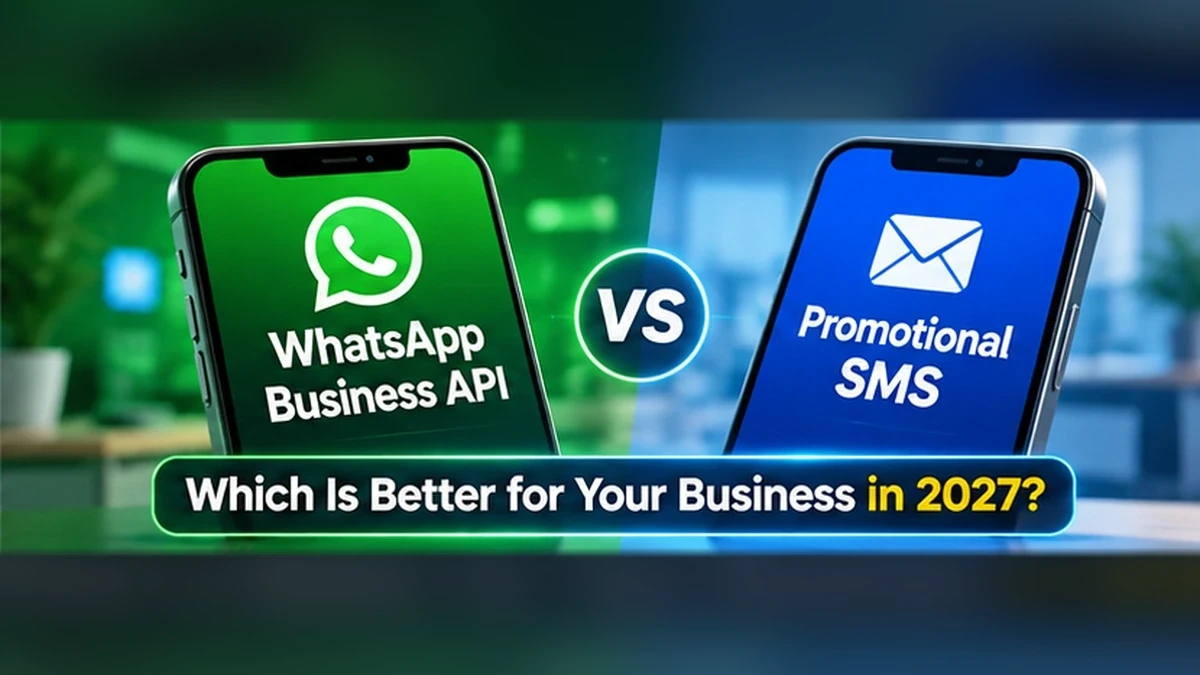
WhatsApp Business Platform and promotional SMS both help businesses communicate at scale, but they solve different problems. WhatsApp is suited to interactive conversations, rich media and journeys where a customer may ask questions. SMS is useful for concise, time-sensitive messages that need to work on a basic mobile phone without an app-based conversation.
Key Takeaways
- WhatsApp supports interactive conversations; SMS is suited to concise telecom messages.
- Choose by customer expectation, message purpose, permission and total operating cost.
- Each channel has separate platform or telecom compliance requirements.
There is no universal winner. The better channel depends on the audience's expectations, the message type, permission, urgency, content format, operational capacity and total cost. This guide compares the two for Indian businesses planning campaigns in 2027.
Understand the two channels
WhatsApp Business Platform
The official WhatsApp Business Platform enables approved business messaging workflows, notifications, customer support and automation. Depending on the approved setup, businesses can use text, images, documents, interactive elements and integrations with CRM or support systems. It is especially valuable when the customer may need to reply, choose an option or continue a conversation with an agent.
Promotional SMS
Promotional SMS sends a concise text message through telecom networks. It can reach a mobile number without requiring the recipient to install a separate messaging app, but the message is limited in format and the sender must follow the applicable telecom commercial communication framework. SMS is often chosen for simple offers, event notices and short calls to action where the customer already has an appropriate relationship or permission.
WhatsApp vs SMS: practical comparison
- Customer interaction: WhatsApp supports replies, interactive flows and agent handoff; SMS is usually a concise one-way message unless a reply or linked journey is separately configured.
- Content format: WhatsApp can support rich media and approved interactive formats; SMS is primarily text, so links and concise copy must be used thoughtfully.
- Customer expectation: WhatsApp needs a clear business identity and permission matching the message categories; SMS needs registered sender and template processes under the relevant telecom rules.
- Best fit: WhatsApp suits conversation, support, product explanation and guided journeys; SMS suits brief, time-sensitive communication where telecom requirements are met.
- Operational needs: WhatsApp requires platform setup, template management where applicable, automation controls and support coverage; SMS requires a compliant provider, sender/header and template configuration, plus delivery reporting.
When WhatsApp may be the better choice
- Customers need to ask questions: A conversation is more suitable than trying to fit every detail into one text message.
- Visual explanation matters: Product photos, short videos, documents or guided buttons can make a complex service easier to understand.
- Support and sales need continuity: A CRM-connected journey can route a reply to an agent and preserve context.
- Customers have chosen WhatsApp: The business has a clear permission record, a recognisable profile and a relevant reason to message.
WhatsApp Business Platform policies describe expectations around opt-in, message categories, opt-out handling and approved templates. The platform's terms also distinguish replies within the 24-hour customer service window from business-initiated messages outside that window, which require approved templates. Review the current policy and platform documentation before designing a workflow.
When promotional SMS may be the better choice
- The message is brief: A short offer, schedule change or time-sensitive notice may not need a rich conversation.
- The recipient may not use WhatsApp: SMS does not depend on an installed messaging app or mobile data connection at the moment the message is received.
- The business has an approved telecom setup: The sender can meet the applicable registration, header, template, consent and scrubbing requirements.
- A simple response path is enough: A concise call-to-action or link can lead to a landing page, helpdesk or booking flow.
Permission and compliance: do not skip this step
For WhatsApp, build a permission process that clearly identifies the business and the types of messages a person can expect. Honour opt-outs and do not use a customer-service conversation as permission for unrelated promotional messages. Keep a record of how the person entered the communication journey.
For SMS, TRAI's TCCCPR framework sets sender and message controls. The sender may need Principal Entity registration, registered headers, registered content templates and applicable consent-template and consumer-consent processes. The message must be submitted with the required identifiers and comply with the registered template and recipient preferences. Ask your telecom provider or registered telemarketer to confirm the current process for your use case.
Do not assume that a phone number in a CRM, spreadsheet or third-party database automatically grants permission for either channel. The business should be able to explain its lawful basis, the purpose, the notice shown to the person and the mechanism for stopping future communication.
How to choose for your business
- Define the message: Is it a promotion, an appointment reminder, a service update or a support conversation?
- Check the audience: Which channel has the person asked you to use, and what permission can you evidence?
- Match the experience: Use WhatsApp when replies and rich content matter; use SMS when a concise text is enough and the telecom rules are met.
- Estimate the full cost: Include platform charges, provider charges, setup, template operations, staff time, automation and customer support—not just the headline message rate.
- Test and measure: Track delivery, replies, qualified actions, opt-outs, complaints and completed business outcomes.
Frequently asked questions
Can a business use WhatsApp and SMS together?
Yes, where the business has the appropriate permission and complies with each channel's separate rules. Use each channel for a defined role rather than sending the same message repeatedly through both.
Is WhatsApp always cheaper than SMS?
No. Pricing depends on current platform pricing, message category, provider terms, volume, integrations and staff effort. Compare the total cost of the customer journey using current rate cards.
Which channel is better for a local business?
A local business should start with what its customers expect. WhatsApp can help when customers ask questions or need visual details; SMS can suit concise updates or reminders. Neither channel should be used without the required permission and compliance setup.
Conclusion
Choose the channel that suits the customer and the task. WhatsApp can support a rich, two-way customer journey; promotional SMS can deliver short, direct communication through telecom networks. A well-planned strategy may use both, but permission, clear sender identity and useful content matter more than sending volume. Astral Promotion can help businesses assess Bulk SMS and WhatsApp Business API requirements before selecting a setup.
Official guidance
WhatsApp Business Messaging Policy · TRAI: Advice to Senders · TRAI: 2025 amendment to TCCCPR.
Comments and discussion
Be the first to join the discussion. Comments are reviewed before appearing publicly.