

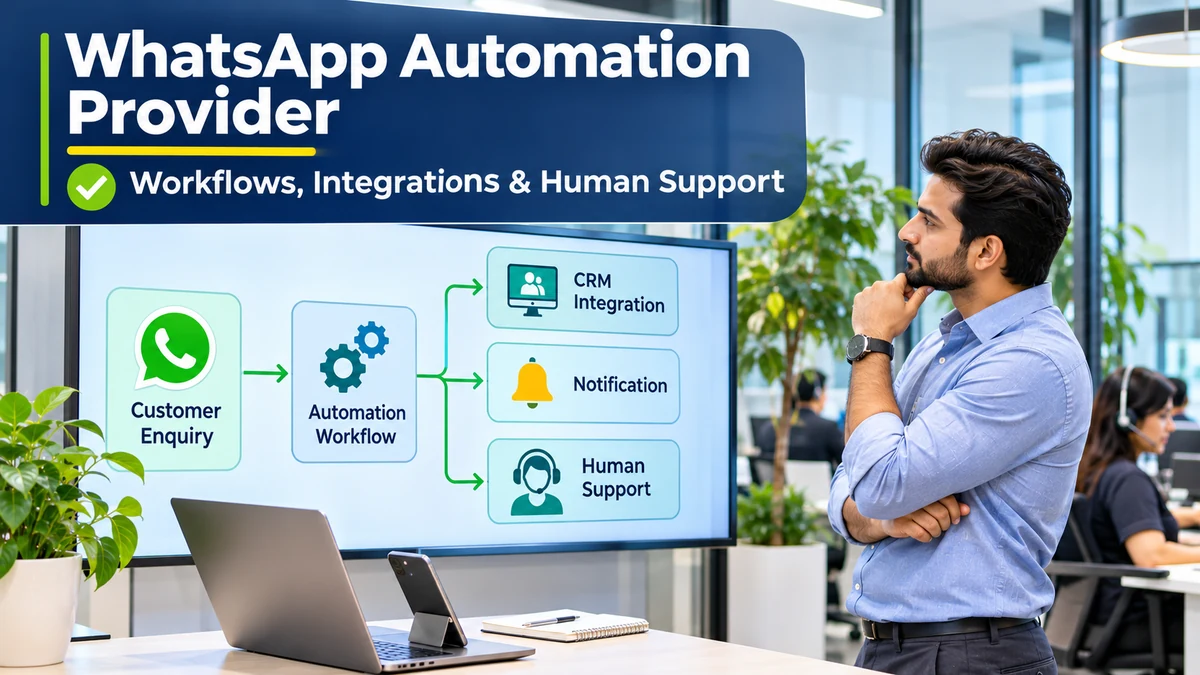
Automation is useful when it removes repetitive work without trapping customers in a bot loop. A good workflow recognises the user’s intent, protects personal information and gives people a clear route to a human when the bot cannot help.
Key Takeaways
- Automation is useful when it removes repetitive work without trapping customers in a bot loop. A good workflow recognises the user’s intent, prot
- Map the conversation from entry point to resolution. Define allowed intents, data fields, fallback responses, escalation queues and service hours
- Check official platform access, approved templates, opt-in, webhook security, role-based access, audit logs, human handover, failure alerts, data
Learn how to evaluate WhatsApp automation platforms for lead routing, customer support, notifications, CRM sync and human handover. The most useful decision is the one that fits the actual purpose, the evidence available and the experience expected by the person receiving the communication.
What this guide covers
Automation is useful when it removes repetitive work without trapping customers in a bot loop. A good workflow recognises the user’s intent, protects personal information and gives people a clear route to a human when the bot cannot help. A clear scope prevents teams from confusing a record count, an API feature or a marketing label with proof that a campaign is suitable. Write down the intended outcome and the limits of the information before selecting a tool or provider.
Keep the business objective specific. Identify the owner of the process, the people affected, the information required and the action that should happen next. This makes it easier to explain the workflow to colleagues and to detect when a proposed use goes beyond the original purpose.
How to plan the right approach
Map the conversation from entry point to resolution. Define allowed intents, data fields, fallback responses, escalation queues and service hours. Build and test the workflow in a controlled environment before connecting it to live customer records.
A lead qualification bot can ask for product interest and preferred callback time, then assign the conversation to a sales representative. It should not collect unnecessary identity or payment details. Document the decisions that matter: who approved the activity, which source or system is involved, what information is used and how a person can ask a question or change their preference.
What to verify before choosing or launching
Check official platform access, approved templates, opt-in, webhook security, role-based access, audit logs, human handover, failure alerts, data retention and vendor exit options.
- Confirm ownership and the person responsible for approving the work.
- Check the source, permissions, technical requirements and current terms that apply.
- Test the complete journey, including failure, correction and escalation paths.
- Keep a record of decisions, changes, incidents and customer preferences.
Platform policy, permission and customer trust
Do not deploy unapproved browser automation, impersonate a human agent or continue sending messages after a user opts out.
For platform-specific requirements, consult Meta’s WhatsApp Business Platform documentation and Business Messaging Policy. Check the live documentation before onboarding or changing a workflow.
Capture permission in a way that tells people which business will contact them and what kinds of messages they should expect. Honour opt-outs, keep frequency reasonable and monitor quality signals. An API connection or provider relationship does not remove the business’s responsibility for its messages.
Measure outcomes and improve
Measure containment only alongside resolution quality, handover time, repeat contacts, customer satisfaction and opt-outs.
Set a baseline before launch and review results over a defined period. Compare like with like, segment the data where appropriate and investigate unexpected changes before drawing conclusions. A metric should help the team make a better decision, not simply make a report look impressive.
Common mistakes to avoid
Do not deploy unapproved browser automation, impersonate a human agent or continue sending messages after a user opts out. Another frequent mistake is measuring activity without checking whether it produced a useful result. Review the customer experience, operational workload and any negative feedback alongside the headline metric.
Keep the process documented and revisit it when the product, provider, rules or audience changes. If an important fact cannot be verified, label it as unconfirmed and resolve it before publication or campaign launch.
Frequently Asked Questions
What should I check first?
Start with the purpose, source, permissions, scope and evidence. Then test the complete workflow before scaling.
Does a large record or message count guarantee results?
No. Volume does not guarantee relevance, delivery, response or conversion. Measure the outcome that matters to the business.
Can I use the same process for every audience?
Usually not. Requirements vary by audience, channel, geography and purpose. Segment carefully and review the applicable rules.
How often should this process be reviewed?
Review it whenever the provider, platform, law, data source or campaign purpose changes, and on a regular schedule set by the business.
Official references
For platform-specific requirements, consult Meta’s WhatsApp Business Platform documentation and Business Messaging Policy. Check the live documentation before onboarding or changing a workflow.
Explore related Astral Promotion services
Explore the related service Explore the related service
Conclusion
Learn how to evaluate WhatsApp automation platforms for lead routing, customer support, notifications, CRM sync and human handover. Use a documented, evidence-led approach, protect the people affected by the workflow and review the results before expanding it. For a service discussion, visit the relevant Astral Promotion service page or contact the team with your requirements.


Comments and discussion
Be the first to join the discussion. Comments are reviewed before appearing publicly.